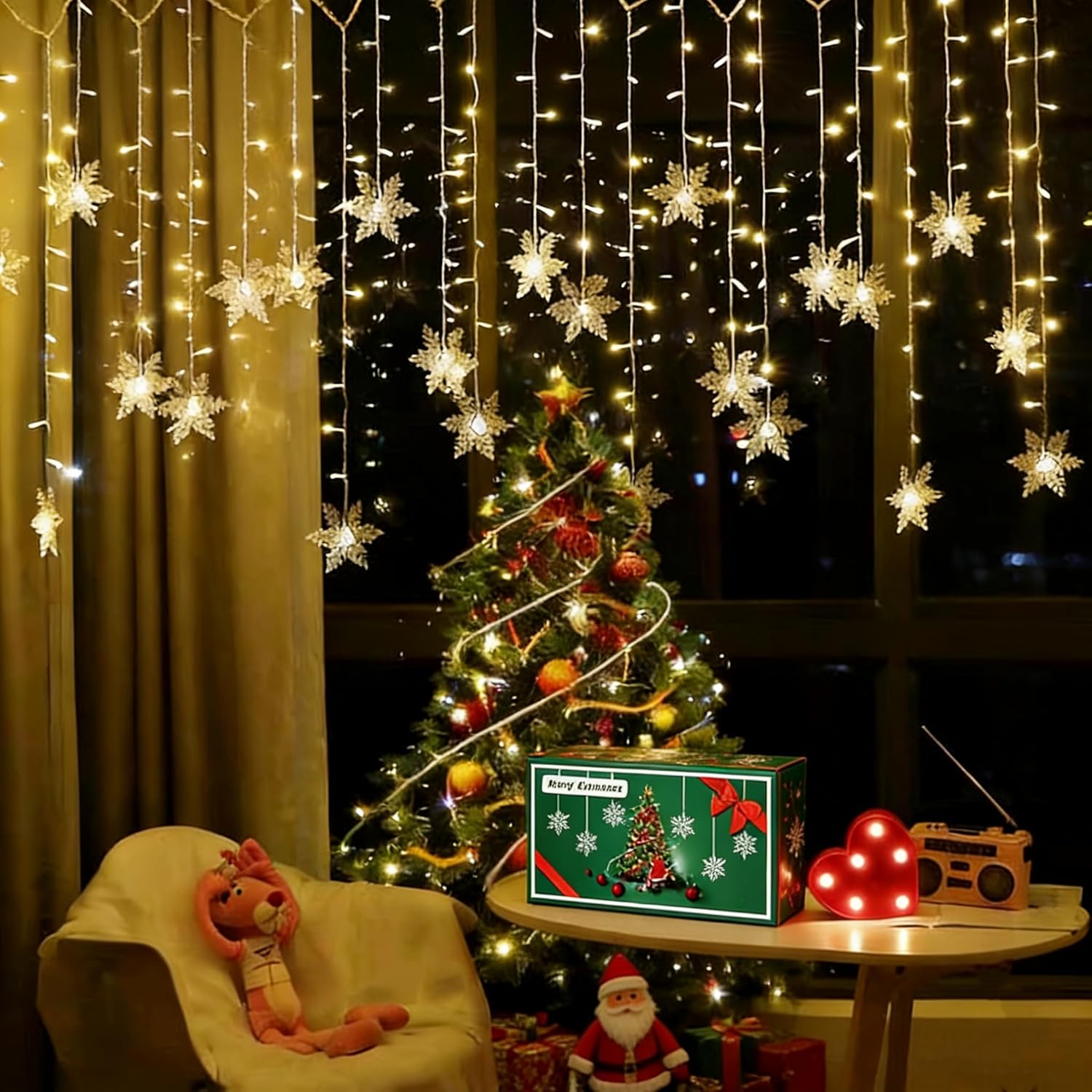

To hang Christmas lights safely, measure first, use lights rated for where they will go (indoor or outdoor), attach them with plastic clips instead of nails or staples, plug outdoor lights into GFCI-protected outlets, and never connect more strands than the manufacturer allows. This guide walks you through every step, from measuring and choosing lights to taking them down without damage.
Plan First: Measure, Choose, and Inspect
Before you climb a ladder or plug in a single strand, spend time planning. This prevents frustration, reduces trips to the store, and keeps you safe.
Measure your space
Use a tape measure to determine the length of gutters, railings, windows, or rooflines you want to cover. Add a few extra feet for connections and corners. Write down the measurements so you know how many feet of lights you need. Buy a little more than you measured to allow for corners, slack and the run back to the outlet.
Choose indoor-rated or outdoor-rated lights
This distinction is critical. Indoor lights are not weatherproof and should never be used outdoors. Outdoor-rated lights have sealed plugs and thicker insulation to withstand rain, snow, and temperature swings. Look for the words “for outdoor use” on the package. If you plan to use lights in a covered porch that is still exposed to moisture, choose outdoor-rated lights anyway.
Check for a safety certification mark
Every light strand you buy should carry a certification mark from a recognized testing laboratory. The most common in the United States are UL (Underwriters Laboratories), ETL (Intertek), and CSA (Canadian Standards Association). These marks indicate the product has been tested for fire and electrical safety. If you see no mark, do not use the lights.
Check Every Strand Before Hanging
Even new lights can have defects. Inspect each strand carefully before you plug it in.
- Look for cracked or broken sockets, frayed wires, and loose connections.
- Check that all bulbs are seated firmly. Missing bulbs leave empty sockets that can cause shorts.
- Plug the strand into a GFCI-protected outlet (see below) and let it run for a few minutes. If any bulbs flicker or the strand trips the outlet, discard it.
Do not attempt to repair a damaged strand with electrical tape. Replace it entirely.
Power: Extension Cords, GFCI Outlets, and Connection Limits
Electrical safety is the most important part of hanging lights. Follow these rules every time.
Use outdoor-rated extension cords
If you need to reach an outlet, use only outdoor-rated extension cords. These have thicker insulation, sealed plugs, and are marked for outdoor use. Indoor extension cords are not safe outdoors, even under a covered porch. Choose a cord that is rated for the total wattage of your lights (the wattage is printed on the light strand tag).
Plug into GFCI-protected outlets
Outdoor lights should be plugged into a GFCI-protected (ground fault circuit interrupter) outlet. Protection can come from the outlet itself (it has TEST and RESET buttons), from another GFCI outlet on the same circuit, or from a GFCI breaker. If you are not sure, have an electrician check, or use a portable outdoor-rated GFCI. GFCIs shut off power instantly if they detect a ground fault, preventing electrocution. For indoor lights near water (kitchen, bathroom, or basement), also use GFCI protection.
Do not exceed the manufacturer’s connection limit
Every light strand has a maximum number of strands that can be connected end-to-end. This limit is usually printed on a tag near the plug or in the instructions. Incandescent sets generally allow far fewer connected strands than LED sets, so never assume the number is the same for every set. Exceeding the limit can overheat the wiring and cause a fire. If you need more lights, use a separate extension cord to a different outlet.
Ladder Safety Basics
Falls are one of the most common ways people get hurt while decorating, so treat the ladder work seriously.
- Use a ladder tall enough for the job. An extension ladder leaned against a roof edge should extend about three feet above it; on a stepladder, do not stand on the top cap or the step below it.
- Keep three points of contact (two feet and a hand, or two hands and a foot) while climbing.
- Place the ladder on firm, level ground. If the ground is soft, use a ladder stabilizer or a board under the feet.
- Do not overreach: keep your belt buckle between the side rails and move the ladder instead.
- Have someone hold the base of the ladder, especially on uneven ground or in windy conditions.
- Wear shoes with good traction, and avoid working in rain or snow.
- Stay well away from overhead power lines, and do not use a metal ladder anywhere near them.
Hanging Lights on Gutters and Rooflines
This is where most outdoor light installations happen. The key is to use clips made for the purpose, not nails or staples.
Use proper clips
Gutter and shingle clips are designed to hold light strands without piercing the wire insulation. Nails and staples can cut through the insulation, creating a shock or fire hazard. There are two main types: gutter clips that snap onto the lip of the gutter, and shingle clips that slide under the edge of roof shingles. Both are inexpensive and easy to install.
How to attach clips
- Starting near an outlet, feed the light strand through the first clip. Gutter clips usually hold the wire in a groove; shingle clips have a hook that the wire sits in.
- Space clips about every 12 to 18 inches to prevent sagging. For heavy strands, space them closer together.
- At corners, use a clip on each side of the corner to keep the wire taut. Do not bend the wire sharply.
- If you need to run a strand across a gap (like a door or window), use a separate clip or a small hook to support the wire.
What to avoid
Never staple or nail through the wire. Never use zip ties tightened around the wire—they can pinch the insulation. Plastic clips are the usual choice: they do not conduct electricity or scratch gutters.
Windows, Railings, and Shrubs
These areas add dimension to your display but require different techniques.
Windows
Use small adhesive clips (rated for outdoor use) on the window frame to outline the perimeter. Alternatively, use suction cup hooks on the glass. For windows on upper floors, use a ladder safely or consider using a light pole with a hook. Avoid running lights across walkways where people could trip.
Railings and porches
Wrap light strands around porch railings or use plastic light clips to attach them to the railing. For a clean look, run the strand along the top rail and use clips to hold it in place. Keep lights away from areas where they could be touched by people or pets.
Shrubs and bushes
Use net lights or wrap individual strands loosely around branches. Do not pull the wire tight—branches move in the wind and can break the wire. Use outdoor-rated lights only. Keep lights off the ground to avoid moisture and lawn equipment.
Indoor Lights: Mantels, Windows, and Stairs
Indoor light hanging is simpler, but still has safety considerations.
Mantels and shelves
Use clear adhesive clips or removable adhesive hooks designed for lights. Run the strand along the top edge of the mantel or shelf, tucking the wire behind items. Do not let lights touch curtains, wrapping paper, or other flammable materials. Keep lights away from heat sources like fireplaces or radiators.
Windows indoors
Outline windows with adhesive clips on the frame. For a cozy glow, place lights behind curtains or blinds—but make sure the lights do not touch the fabric. Use LED lights for windows to reduce heat.
Stair railings
Wrap lights around banisters or use clips to attach them along the handrail. Secure the wire at the top and bottom to prevent sagging. If you have young children or pets, keep lights out of reach or use battery-operated lights with no trailing cords.
Timers and Turning Lights Off
Leaving lights on all night wastes electricity and increases fire risk. Use timers to automate your display.
Outdoor plug-in timers are weatherproof and let you set when lights turn on and off. Many have photocell sensors that turn lights on at dusk and off at a set time. For indoor lights, a simple indoor timer works fine. Always turn lights off when you go to bed or leave the house. This is one of the most important safety tips from the National Fire Protection Association.
Taking Lights Down
When the holiday season ends, remove lights promptly. Lights left up for months can deteriorate in weather and become a hazard next year.
- Remove clips and hooks carefully. Do not pull the wire—unclip each section.
- Inspect each strand as you take it down. Discard any with cracked sockets or frayed wires.
- Wind lights loosely around a spool or a piece of cardboard. Do not wrap tightly around your elbow—this can break internal wires.
- Store lights in a cool, dry place away from rodents. For more tips, see our guide on how to store Christmas decorations.
FAQ
Can I use indoor lights outdoors if they are under a covered porch?
No. Indoor lights are not sealed against moisture and humidity. Even under cover, condensation can cause shorts and fires. Always use outdoor-rated lights outside.
How many strands of lights can I connect together?
Only as many as the manufacturer allows; the limit is on the tag near the plug or in the instructions. LED sets usually allow more connected strands than incandescent sets, but the exact number varies from product to product.
Is it safe to use extension cords for Christmas lights?
Yes, as long as you use outdoor-rated extension cords for outdoor lights, and indoor-rated cords for indoor lights. Make sure the cord is rated for the total wattage. Do not run extension cords through windows or doors where they could be pinched.
How do I remove light clips without damaging my gutters or shingles?
Gutter clips usually slide off easily. For shingle clips, gently lift the shingle and slide the clip out. If a clip is stuck, use a plastic pry tool or your fingers—do not use metal tools that could scratch. Adhesive clips can be removed by pulling the tab slowly; any residue can be cleaned with rubbing alcohol.
Hanging Christmas lights safely is mostly about planning and using the right tools. Measure your space, choose certified lights, use clips instead of nails, respect electrical limits, and always turn lights off when you are away. With these steps, you can create a beautiful display that lasts through the season. For more ideas on decorating your entryway, see our Christmas front porch ideas. And if you are also decorating your tree, see our guide on how to decorate a Christmas tree. For additional safety information, the Consumer Product Safety Commission offers holiday safety tips.