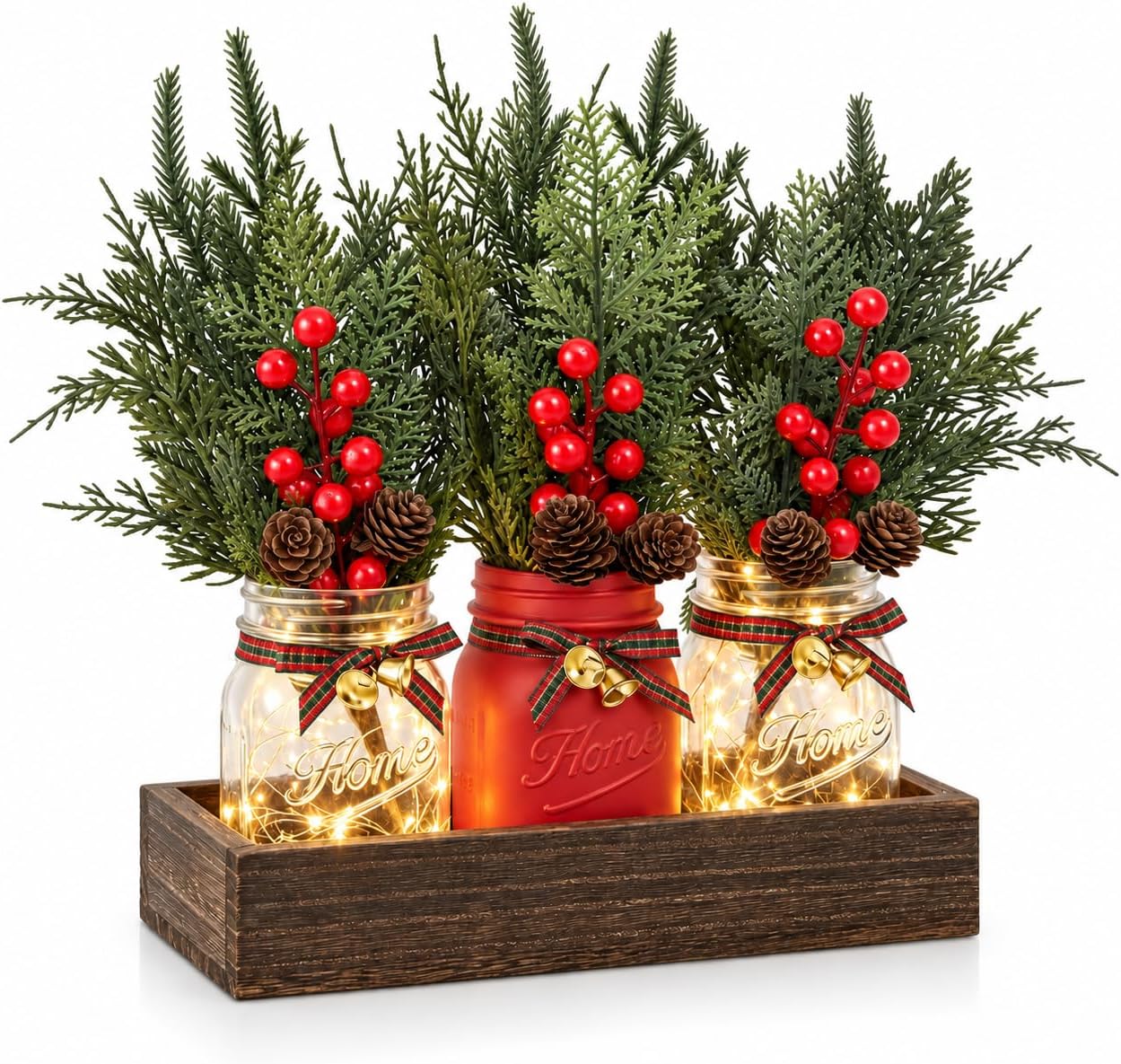

A Christmas table runner is one of the quickest ways to anchor a holiday table. It adds color and texture, protects the tabletop, and works on almost any table shape. The key is to choose a length and fabric that fit your table and your routine, then style it with confidence.
Why a Christmas Table Runner Works
Runners are slim strips of fabric laid lengthwise across a table. They define a central line for centerpieces and dishes while leaving the table’s own surface visible. That makes them a good choice for wood tables with a nice finish, narrow tables where a full cloth would feel heavy, and dining areas where you want a quick seasonal switch.
Beyond looks, a runner protects the middle of the table where hot dishes, serving platters, and centerpieces sit. It is also easier to remove and wash than a full tablecloth. If you are setting up a buffet or a large holiday spread, a runner can guide the eye along the serving line and keep the table from feeling crowded.
Table Runner vs. Tablecloth: Which to Choose
Choosing between a runner and a tablecloth depends on the look you want. A tablecloth covers the entire top and usually hangs to the floor, giving a formal, polished backdrop. A runner leaves the sides of the table exposed, which can feel lighter and more modern.
You do not have to pick one. A runner layered over a tablecloth is a common holiday look, and it lets you combine a neutral base with a patterned or metallic runner. If you prefer a simple table, a runner alone is often enough. For more ideas, check out our Christmas table runner ideas to see different styling approaches.
Think about how much tabletop you need for plates, glasses, and serving dishes. If you are serving family style with many platters, a tablecloth can give you a full surface to protect. If you want to show off a wood surface or use charger plates and placemats, a runner keeps the center clear while still adding festive detail.
Measuring Length and Drop
Measuring for a runner is straightforward, but the drop matters more than most people expect. The drop is the runner’s overhang at each end. Without enough drop, the runner looks like a placement mat; with too much, it can overwhelm small tables.
To measure, use a fabric tape measure along the length of your table. Then decide how far you want the runner to hang over each end. A good starting point is to let the runner overhang by roughly the width of your hand, then adjust based on the table’s height and the look you want. On a formal table, a longer drop looks elegant; on a casual table, a shorter drop feels snug.
If you plan to layer a runner over a tablecloth, make sure the runner is clearly narrower than the tabletop so the cloth shows on both sides. For a round table, measure the diameter if you want a single runner across the center, or measure two equal lengths if you prefer a cross style. For a square table, use the side length as your guide and add the same overhang to all ends that will hang free.
Fabrics and Washability
The fabric you choose determines both the feel of the table and how much work it will be to care for. Cotton and cotton blends are popular because they press well and tolerate regular washing. Linen looks relaxed but wrinkles easily. Polyester and synthetic blends hold color and resist wrinkling, but they may feel less breathable. Velvet adds a soft, luxurious look but needs more careful handling.
Before buying, check the care label. Some runners are machine washable on a gentle cycle; others are dry clean only. If you expect spills, choose a fabric that can handle repeat washing. If you are buying a decorative runner for a buffet where liquids are less likely, you have more freedom with delicate fabrics.
When you are ready to shop, start with Christmas table decorating basics, then browse Christmas table runners that match your table shape and your cleaning routine.
| Fabric | Look | Care |
|---|---|---|
| Cotton | Crisp and classic | Machine washable in most cases |
| Linen | Relaxed with natural texture | Wrinkles easily; wash and press while damp |
| Polyester blend | Smooth and colorfast | Releases wrinkles; usually easy to wash |
| Velvet | Soft and formal | Often delicate; check the care label |
Layering a Runner with Other Linens
Layering is a simple way to make a table feel polished. Start with a tablecloth in a neutral tone, then place a runner down the center in a contrasting color or pattern. You can add placemats or charger plates between the runner and the table’s edge to define each place setting.
Texture also matters. If your runner is smooth cotton, a linen tablecloth creates a gentle contrast. If your runner is patterned, keep the base cloth solid. If your runner is solid, consider a subtle tone-on-tone pattern underneath.
A runner is not just for dining tables. On a buffet, run one down the center of the table to direct guests to the dishes and keep the tabletop protected. For more ideas, see our Christmas buffet table ideas. You can also match a folded napkin style to the runner’s color; our Christmas napkin folding ideas are a good place to start.
Cross Runners for Round and Square Tables
If your table is round or square, a single runner leaves much of the surface exposed. A cross runner layout solves that by using two runners placed at right angles to each other, forming an X across the table. The crossing point becomes a natural place for a centerpiece, and the four hanging ends make the table feel dressed without a full tablecloth.
To set up a cross runner, choose two runners that are the same length and drop. Lay the first one across the center in one direction, then lay the second across the center at a perpendicular angle. Make sure the ends hang evenly and the crossing point lies exactly in the middle. Adjust the fabric so the two runners lie flat against each other.
This technique also works on a square table for a buffet or a holiday dinner. You can mix colors for a playful look or keep both runners identical for symmetry. Use the same hand-width overhang you would use for an ordinary runner.
Stain Care and Everyday Upkeep
Stains are part of holiday dining. The most important step is to act quickly. Blot the spill with a clean cloth to remove as much liquid as possible; do not rub, because rubbing pushes the stain deeper into the fibers.
For wet stains, check the care label, then spot treat with a mild detergent or a stain remover that is safe for the fabric. Wash the runner according to the label after the spot treatment. For wax drips from candles, let the wax harden, then scrape off as much as you can with a dull blade before washing. For grease or red wine, blot immediately and treat promptly.
If the fabric is delicate or dry clean only, take the runner to a professional cleaner rather than trying to fix it at home. When you store runners for the year, fold them with a sheet of acid-free tissue to help prevent creases and discoloration.
Common Buying Mistakes
Many runner problems come from a few repeat mistakes. Keep these in mind while you shop and set the table.
- Choosing a runner that is exactly the table length or too short to overhang, which makes it look like a placemat.
- Picking a fabric you are not willing to care for. If you do not like ironing, avoid wrinkle-prone fabrics.
- Forgetting to buy two matching runners for a cross style, which forces you to make a last-minute compromise.
- Layering too many patterns. A busy runner over a busy tablecloth can make the table hard to look at.
- Ignoring the slip factor. If the runner slides around, use a non-slip gripper underneath or look for a runner with a textured backing.
FAQ
How long should a Christmas table runner be?
The runner should be longer than the table so it overhangs at each end. Measure your table length and add the desired drop at both ends. A hand-width drop is a good place to start, and you can adjust for formality.
Can you use a table runner on a round table?
Yes. A single runner can cross the center of a round table, or you can use two runners at right angles to create a cross. Measure the diameter and add a drop at each end so the runner hangs down beyond the edge.
Can a runner replace a tablecloth?
Usually yes. A runner alone works well for a casual or modern holiday table, especially when the tabletop is attractive. For family-style meals with many dishes, a tablecloth may offer more protection, or you can layer a runner over a tablecloth.
What is the best way to clean a stained runner?
Blot the spill right away, spot treat with a safe cleaner, and wash according to the care label. For wax or grease, scrape off the excess before washing. When in doubt, take the runner to a professional cleaner.
With the right measurement and a fabric you can live with, a Christmas table runner becomes a simple centerpiece of your holiday setup. Whether you dress a buffet, layer it over a cloth, or use cross runners on a round table, you can change the whole mood of a room in minutes.